
Fight Star - Team Manager Idle
Gryphon GamesSports
4.115.00 Reviews
- Version
- 1.3.0
- Installs
- 10.00K
- Age Rating
- Everyone 10+
Screenshots
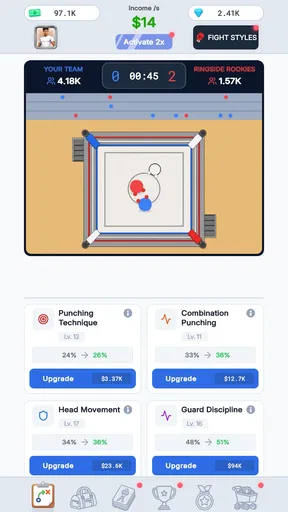
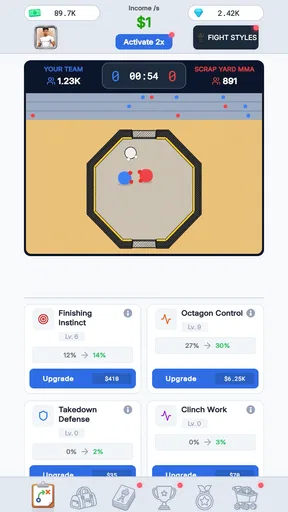
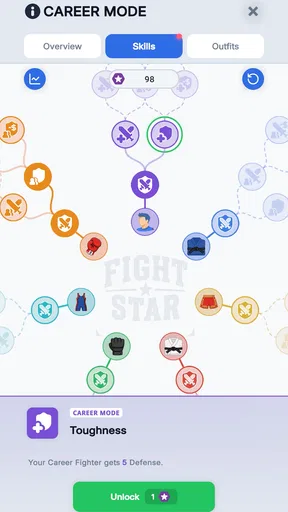
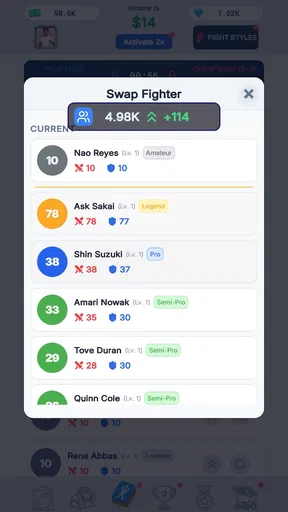
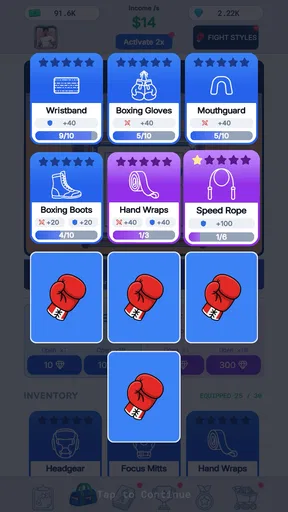
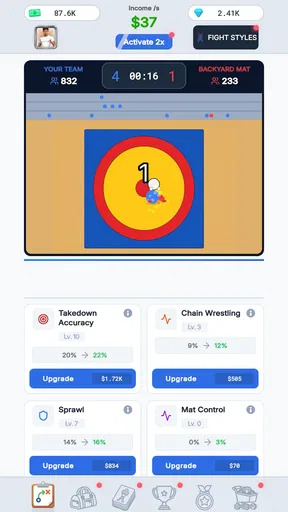
Our Review of Fight Star - Team Manager Idle
 Analysis by Appyee
I approached Fight Star as a small, low-pressure sports management game rather than a traditional boxing or MMA simulator. That distinction matters. You are not controlling every punch in real time; you are building a gym, developing fighters, and making decisions that gradually turn a modest training operation into a title-chasing team. In my experience, its appeal comes from checking progress, choosing what deserves attention, and enjoying the feeling that the gym keeps moving forward even when I only have a few minutes to play.
That makes it an easy game to recommend to someone who likes combat sports but prefers planning over reflexes. It is also a game I would describe carefully to anyone expecting a deep tactical fighting experience. The fun is in the manager’s chair, not in manually performing combinations, defending takedowns, or reading an opponent frame by frame. Gryphon Games has aimed at a compact idle sports experience, and the result works best when I treat it as a routine rather than a full-length competitive fighter.
Running a gym instead of throwing every punch
The central loop is straightforward: improve the gym, train fighters, and pursue championships. What gives that loop some personality is the way those jobs connect. A better training operation should support stronger athletes, while stronger athletes give the gym a reason to keep expanding. I found myself thinking less about one isolated match and more about whether my next decision would help the whole team over time.
This structure is particularly comfortable on a phone. I can open the game during a short break, review what has changed, make a management decision, and leave without needing a long uninterrupted session. That is the right rhythm for an idle manager. It does not demand the same attention as a conventional sports game, and I never felt that I had to sit through a complete career session before putting the device down.
The boxing and MMA setting also gives the management choices more flavor than a generic business simulator. Training a fighter for a combat career feels more personal than simply upgrading a building or collecting abstract resources. Even when the underlying actions are simple, the context encourages me to think about progression, preparation, and the difference between a promising athlete and a reliable title contender.
One useful habit is to avoid treating every improvement as equally urgent. I get more value from deciding what the gym currently lacks than from tapping through upgrades automatically. If the team is progressing but matches still feel disappointing, I focus on fighter development rather than blindly improving the facility. If progress feels slow across the board, the gym becomes the more sensible priority. This kind of alternating focus is one of the better ways to make the idle loop feel like management rather than maintenance.
Why the idle format fits the subject
Idle design can sometimes make a sports game feel disconnected from the sport itself, but it makes reasonable sense here. A real gym is built through repeated training, gradual improvement, and long-term planning, not one dramatic action. Fight Star captures that broad idea without asking me to micromanage every minute. The game is most satisfying when I check in with a clear purpose: improve a weak point, prepare the team for the next challenge, or make better use of the progress that has accumulated.
The trade-off is that the game cannot provide the immediate excitement of a hands-on fight. If your favorite part of combat games is timing a counter or controlling a round, this approach may feel distant. I would choose a traditional fighting game for direct skill expression and Fight Star for the quieter pleasure of building a system that produces better fighters.
That comparison also explains who should skip it. Players looking for detailed move lists, realistic bout control, or a large competitive scene are likely to find the manager format too restrained. The game is not trying to replace a boxing simulator. It is closer to a light sports strategy companion, with combat as its theme and long-term development as its main activity.
Small decisions that make the loop more rewarding
My first practical tip is to create a short check-in routine. I look at the gym’s overall condition, identify the fighter or area that is holding back progress, and spend my available attention there before collecting or starting anything else. This prevents the common idle-game mistake of upgrading whatever happens to be highlighted. The routine takes little time, but it makes each visit feel intentional.
A second useful approach is to separate progress from excitement. A fighter may be the most interesting part of the roster, yet the best decision can still be an unglamorous gym improvement. Conversely, a stronger facility is not automatically the answer if the team is already well supported and one athlete needs focused development. Thinking in terms of bottlenecks gives the simple systems more depth than the store summary suggests.
Third, I would avoid spending immediately just because the game presents a tempting shortcut. Fight Star is free to start, but optional purchases range from $0.99 to $99.99 per item. That is a wide gap, so I would first learn how the normal progression feels and decide whether convenience genuinely improves my experience. For a casual idle game, patience is often a better test of value than buying the fastest available boost.
There is also a psychological trick that helps: treat championship progress as a long project rather than a demand for constant success. When I expect every session to produce a major breakthrough, the slower stretches feel frustrating. When I use those stretches to strengthen the gym and prepare the roster, the same waiting period feels more purposeful. That mindset suits the game’s structure and reduces the pressure to chase every immediate reward.
Where the experience loses momentum
The biggest weakness is the limited sense of direct control. The manager role is clear, but the distance between a decision and the final result can make victories feel less earned than they would in a hands-on sports game. I can make sensible development choices, yet I am not personally solving the tactical moments inside a bout. For some players, that is exactly the point; for me, it means the game’s emotional highs depend heavily on the satisfaction of progression rather than the drama of individual fights.
Idle games also live or die by pacing. When progress is moving, the loop is pleasant and easy to revisit. When advancement slows, the same actions can start to feel repetitive. I noticed that the game is strongest when I play in short visits and weakest when I expect it to provide a long, continuously engaging session. It is better as something I check throughout the day than as a game I would sit with for hours at a time.
The purchase structure deserves attention for the same reason. A free entry point is welcome, but the presence of optional items means players should keep their own spending boundaries in mind. I would be especially cautious if a child is using the game, even though its content rating is Everyone 10+. The age guidance describes the intended content audience, not a personal budget, so purchase controls and supervision remain sensible.
Another limitation is that the broad concept may appeal more strongly than the moment-to-moment variety. Building a boxing and MMA gym sounds rich, but an idle framework naturally simplifies the sport. Anyone hoping for a detailed simulation of matchmaking, corner advice, judging, or fighter psychology should lower those expectations. I enjoyed the theme, but I would not choose this game as my only combat-sports experience.
Device compatibility is also worth checking before installing. The game requires iOS or Android version 12 or later, which is reasonable for many current phones but excludes older devices. On a supported phone, the format feels naturally suited to mobile play; on an older handset that cannot meet the requirement, the question is settled before the management loop even begins.
Who gets the most from Fight Star
I think the best audience is someone who enjoys sports themes, incremental progress, and decisions that remain understandable without a tutorial-sized commitment. If you like checking a game in the morning, making a few choices during lunch, and returning later to see how the gym has developed, this is a good match. It also suits players who want a combat setting without the intensity or precision demands of a conventional fighter.
It can work well for a newcomer to management games because the premise is easy to grasp. You build the gym, train the athletes, and aim for titles. At the same time, the bottleneck approach gives experienced idle players something to think about beyond simply pressing every available upgrade. I would not call it a complex management simulation, but it has enough strategic framing to make routine check-ins feel more meaningful.
For a realistic everyday scenario, imagine having ten minutes before a commute. I can open the game, review the team, spend the accumulated progress on the most urgent improvement, and leave before boarding. Later, I can return to see whether that choice helped. There is no need to reserve an evening for it, and the session does not depend on having perfect concentration. That convenience is one of its clearest strengths.
I would recommend a different option to someone who wants a competitive multiplayer environment, detailed athletic statistics, or the satisfaction of personally outplaying an opponent. A direct-control boxing or MMA game will provide more immediate tension. A deeper management simulation will offer more detailed planning. Fight Star sits between those choices: lighter than a serious simulator, but more purposeful than a purely decorative idle app.
The current release is version 1.3.0, and the game comes from Gryphon Games. Its audience appears modest, with over ten thousand installs, an average rating of 4.1 from around 180 ratings, and 14 written reviews. I read that combination as a sign of a small but reasonably positive reception rather than proof that it will satisfy every sports fan. The rating is encouraging, but the compact community means I would judge the game mainly by whether its idle structure suits my habits.
Its Everyone 10+ rating makes the presentation approachable, while the sports theme gives it a clearer identity than many idle management games. Still, the rating does not change the need to explain purchases to younger players. I would let a child try it only with the same spending safeguards I would use for any free-to-play game that offers paid items.
My final view after building around the loop
Fight Star is at its best when I want a calm, repeatable boxing and MMA management game rather than a playable fight simulator. The gym-building premise gives the idle format a useful sense of direction, and the relationship between facility growth, fighter training, and championship ambition makes short sessions worthwhile. I especially like that the game rewards thinking about what is slowing the team down instead of treating every upgrade as interchangeable.
My reservations are just as clear. The lack of direct bout control limits the drama, long sessions can become repetitive, and the optional purchase range calls for restraint. The game also asks players to accept gradual progress, so anyone who needs constant action may lose interest quickly. Those are not minor details; they define the experience.
For me, the right recommendation is conditional but positive. Install it if you enjoy idle progression, sports management, and brief check-ins where one sensible decision can improve the whole gym. Skip it if you want realistic fight tactics, deep simulation, or hands-on competition. As a free sports game, it earns a place on my casual rotation because its theme and management loop fit together naturally, but its value depends on enjoying the journey toward a title more than controlling the fight itself.
Verdict
Strengths of Fight Star - Team Manager Idle
- Simple idle gameplay works well for short play sessions.
- Team-building adds strategy beyond basic tapping mechanics.
- Matches continue progressing while you are offline.
- Stylized visuals make the fighters easy to distinguish.
- Frequent rewards help new players build a roster quickly.
Limitations of Fight Star - Team Manager Idle
- Progress can feel slow without watching ads or spending currency.
- Combat control is limited once a match begins.
- Roster upgrades may become repetitive after extended play.
- Some features take time to unlock for new players.
- The game may require a constant internet connection.
Other Releases by Gryphon Games
View All
Planet Crusher: Mine & Attack
Arcade3.9

Race Star - Team Manager Game
Racing4.0

Sport Star - Team Manager Game
Sports4.3

Track Star - Team Manager Idle
Sports4.2
Similar Picks in This Category
View All
8 Ball Pool
Miniclip.com4.8

Pooking - Billiards City
AIM TOP GAME TECHNOLOGY LIMITED - pool4.6

Carrom Pool: Disc Game
Miniclip.com4.4

EA SPORTS FC Soccer Mobile 26
ELECTRONIC ARTS4.6

World Soccer League
mobirix4.3

Soccer Cup 2026: Football Game
INLOGIC SPORTS - football tennis golf soccer4.3
Frequently Asked Questions
What is Fight Star - Team Manager Idle?
Fight Star - Team Manager Idle is a mobile management and idle progression game focused on building and developing a team of fighters. You recruit characters, improve their abilities, equip them with better gear, and send them into battles. Much of the progress continues automatically, making it suitable for players who enjoy upgrading a roster without needing to control every attack manually.
How does the gameplay work in Fight Star - Team Manager Idle?
The main gameplay loop involves preparing your team, entering battles, collecting rewards, and reinvesting those resources into stronger fighters. Battles are generally designed around automated or simplified combat, so your decisions about team composition, upgrades, equipment, and progression are especially important. Even when you are not actively playing, the game can provide idle rewards that help advance your squad.
Can Fight Star - Team Manager Idle be played offline?
Some parts of Fight Star - Team Manager Idle may remain accessible without a constant internet connection, particularly basic progression or previously loaded gameplay features. However, online access may be required for advertisements, cloud synchronization, events, account functions, purchases, and certain reward systems. If offline play is important to you, check the current store description and test the game after installation, since connectivity requirements can change with updates.
Does Fight Star - Team Manager Idle include in-app purchases or advertisements?
Like many free-to-download idle management games, Fight Star - Team Manager Idle may use advertising and optional in-app purchases as part of its monetization system. Advertisements can sometimes offer bonus rewards or speed up progress, while purchases may provide currency, bundles, or convenience items. You can usually play without spending money, but progression may feel slower and some premium offers may appear regularly.
Is Fight Star - Team Manager Idle suitable for casual players?
Fight Star - Team Manager Idle is likely to appeal to casual players who enjoy short sessions, automatic battles, and gradual team development rather than complex real-time controls. You can check your progress, collect idle rewards, upgrade fighters, and return later. Players seeking highly interactive combat or a competitive action experience may find the management-focused design less engaging than a traditional fighting game.
Play our best games!


